Parking lot stains are easy to ignore at first. A small oil spot here, a dark tire mark there. Over time, those stains spread, sink into the surface, and make the entire property look worn down. Beyond appearance, many stains can weaken asphalt or concrete if they are left untreated. Understanding the most common parking lot stains and how they should be removed can help protect your pavement and reduce long-term maintenance costs.
How to Remove Common Stains
Oil and Grease Stains
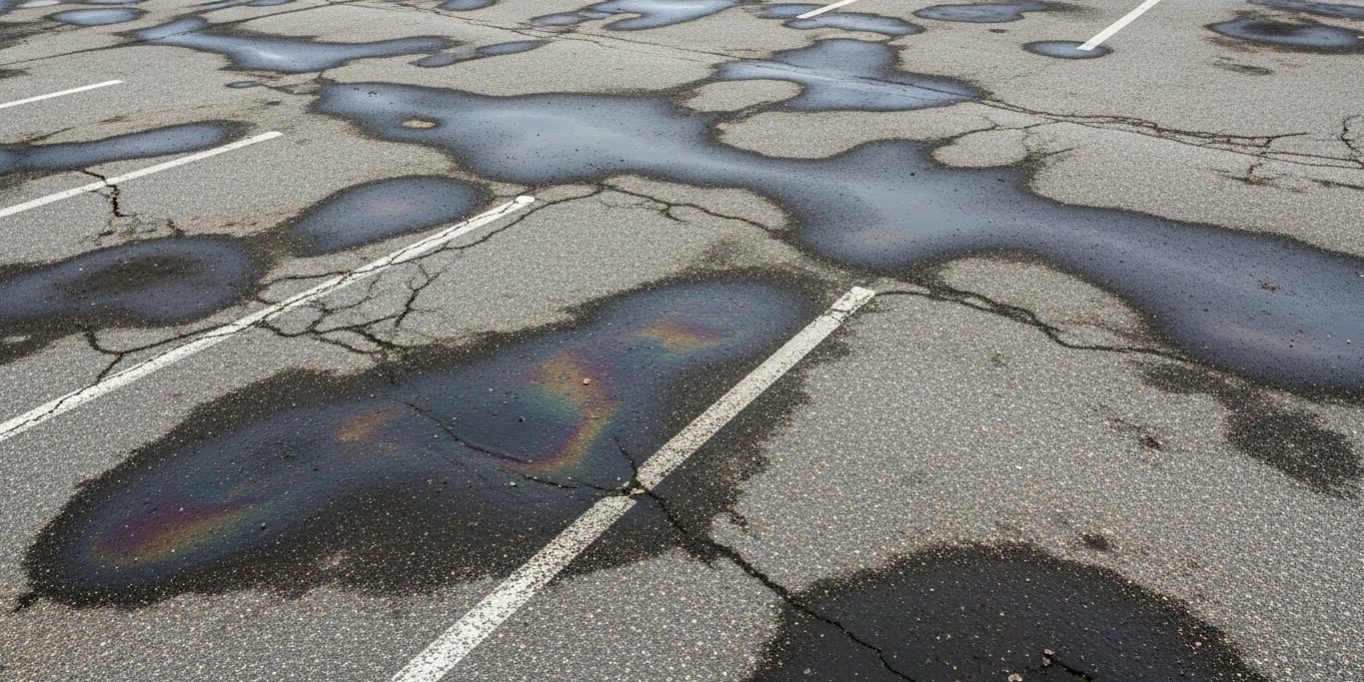
Oil and grease stains are the most common problem in parking lots. Vehicles leak motor oil, transmission fluid, and brake fluid, especially in high-traffic areas. These fluids break down asphalt over time, softening the surface and making it more likely to crack or erode. Simply rinsing with water is not enough. Proper removal requires professional pressure washing and degreasers that lift oil from the surface instead of pushing it deeper into the pavement.
Rust Stains
Rust stains often come from parked vehicles, metal fixtures, or nearby construction materials. They leave orange or brown marks that can be difficult to remove once they set in. Rust stains do not usually damage the pavement right away, but they make the lot look neglected. Specialized cleaners and controlled pressure washing are needed to remove rust without damaging the surface.
Tire Marks and Rubber Buildup
Tire marks are common near entrances, exits, and sharp turns. Hot tires leave behind rubber residue that builds up over time, creating dark streaks on asphalt or concrete. While tire marks are mostly a cosmetic issue, they can make surfaces look dirty and worn. Professional pressure washing breaks down rubber buildup and restores a cleaner, more even appearance.
Chewing Gum and Sticky Residue
Chewing gum, candy, and sticky spills are common in busy commercial parking lots. Over time, these substances harden and trap dirt, creating dark, uneven patches. Gum is especially difficult to remove without the right equipment. High-pressure hot water systems are often required to safely lift gum from the surface without damaging the pavement.
Paint and Line Marking Residue
Paint overspray or faded line markings can leave uneven patches across the parking lot. This often happens after repainting parking lines or making layout changes. Improper removal can damage asphalt or concrete, so it is important to use controlled pressure and the right cleaning solutions. Professional cleaning ensures old paint is removed safely and evenly.
Why Professional Cleaning Matters
Many parking lot stains cannot be removed with basic washing methods. Using the wrong chemicals or too much pressure can cause more harm than good. Professional parking lot cleaning targets stains while protecting the surface underneath. Regular stain removal also helps prevent long-term damage, improves safety, and keeps the property looking well maintained.
How Universal Parking Lot Services Can Help
At Universal Parking Lot Services, we specialize in removing tough parking lot stains without damaging asphalt or concrete. Our pressure washing and sweeping services are designed for commercial and strata properties that need reliable, ongoing maintenance. By addressing stains early, we help property owners avoid surface breakdown and costly repairs.
Final Thoughts
Stains in your parking lot are more than just an eyesore. Oil, rust, rubber, and other residues can shorten the life of your pavement if left untreated. Regular professional cleaning keeps stains under control, protects your investment, and maintains a clean, professional appearance.
Ready to Remove Stubborn Parking Lot Stains?
If your parking lot has oil spots, tire marks, or built-up grime, now is the time to act. Contact Universal Parking Lot Services today to schedule professional parking lot cleaning and keep your property looking its best.